While most fusion projects chase star-like conditions with giant magnets or stadium-sized lasers, one Canadian company is betting that a more mechanical, almost industrial approach can get to commercial power first — and public markets are buying in.
Canada’s bold move: fusion goes public
Canada is set to claim a world first: hosting the initial stock market listing of a “pure play” nuclear fusion company. The firm, General Fusion, has agreed a business combination with Spring Valley Acquisition Corp., a US-listed SPAC, creating what amounts to the first publicly traded company focused solely on commercial fusion power.
The deal values the combined entity at around $1 billion, giving the Canadian fusion pioneer a war chest that signals a new phase for the sector. Until now, fusion has largely been the domain of government labs, long-term research projects and patient private capital.
Public markets are about to test whether investors believe fusion can move from physics experiment to grid asset within a single decade.
The transaction blends two main funding streams:
- roughly €100 million from an oversubscribed private financing round
- around €220 million from the SPAC’s cash reserves, assuming limited investor redemptions
For General Fusion, this is not just a visibility stunt. The company says the proceeds are earmarked to fully fund a key machine known as Lawson Machine 26, a full-scale demonstrator at the heart of its commercial roadmap.
Lawson Machine 26: a near-commercial fusion demonstrator
A real-size testbed, not a lab toy
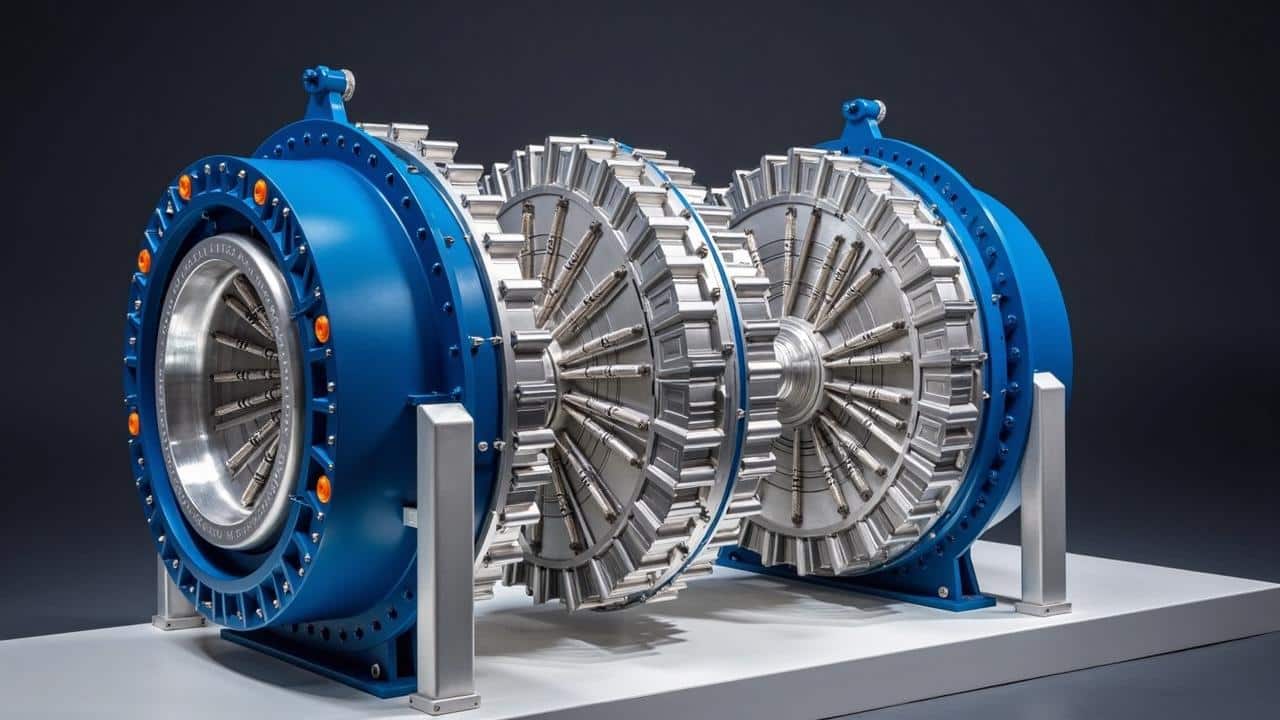
The Lawson Machine 26, often shortened to LM26, is already being assembled and commissioned. Unlike many table-top experiments or scaled-down prototypes, LM26 is built at roughly half the diameter of an anticipated commercial reactor.
That decision changes the nature of the project. The machine is not just probing plasma physics; it is testing the plumbing, materials, and mechanical systems that a future power plant would need to run day after day.
General Fusion’s development plan for LM26 revolves around three technical milestones:
➡️ Already the world’s top tyre maker, Michelin thinks bigger with €500m double US acquisition
➡️ Goodbye footprint marks on your sandals: the trick to erase them and make them look new again
➡️ Approaching dogs reflects openness to uncertainty
➡️ The budgeting concept that finally clicked after years of frustration
➡️ This tiny conversational habit can quietly improve relationships
➡️ This slow-roasted pork shoulder makes the juiciest sandwiches you’ll ever eat
➡️ Stop washing your hair this often dermatologist warns we have been doing it all wrong
- Reaching 1 keV (about 10 million degrees Celsius) to stabilise and control the plasma
- Climbing to 10 keV (around 100 million degrees), where fusion reactions become efficient
- Achieving the so-called Lawson criterion, the combination of temperature, particle density and confinement time that marks the threshold for net useful fusion power
Hitting the Lawson criterion is the dividing line between an impressive experiment and a machine that could ultimately power homes and factories.
Pistons and liquid metal instead of giant magnets
Where General Fusion stands out is in how it squeezes energy out of hydrogen isotopes. Most fusion concepts use massive superconducting magnets (tokamaks and stellarators) or banks of powerful lasers (inertial confinement). General Fusion’s approach looks more like a heavy-duty engine than a science fiction device.
In its design, dozens of mechanical pistons slam inward almost simultaneously, compressing a sphere of swirling liquid lithium. At the centre of this spherical cavity sits a pre-heated, magnetized plasma fuel. As the pistons fire, the liquid metal implodes towards the centre, rapidly pushing the plasma to fusion conditions.
The spinning liquid shell is not just a clever engineering trick; it serves two critical purposes:
- It shields the solid structure from damaging high-energy neutrons generated by fusion reactions.
- It directly absorbs the fusion energy as heat, which can then be fed into a standard steam cycle to produce electricity.
One of the hardest technical problems in fusion is that neutrons gradually destroy solid materials. Pipes, walls and magnets can become brittle and highly activated. A constantly renewing liquid layer removes much of that headache and, on paper, simplifies plant maintenance.
Fusion as an industrial machine, not a physics sculpture
Executives at General Fusion like to compare their plant to a diesel engine plugged into the grid: something sturdy, cyclical and serviceable by technicians who understand rotating machines and hydraulics, not just plasma physics.
The machine fires its pistons several times per second, producing bursts of fusion energy that average out into a continuous power output. That rhythm suits a grid that needs reliable, on-demand electricity rather than occasional experimental shots.
Instead of pushing every boundary of plasma stability, the company is trying to lower the complexity curve so investors can see a path to factories, not just flagship experiments.
This philosophy runs counter to many government-backed projects, which often prioritise maximising scientific understanding. General Fusion is focusing on what can be built, replicated and financed at scale, even if that means living with slightly less elegant physics.
An energy system under pressure
Why timing suddenly matters for fusion
The timing of Canada’s fusion listing intersects with a dramatic shift in global electricity demand. The International Energy Agency projects that power consumption could grow by 40–50% by 2035. Data centres, electrified industrial processes, heat pumps and electric vehicles all pull the grid in the same direction: up.
Wind, solar and batteries are surging, but they bring variability. Gas and existing nuclear plants provide dispatchable capacity, yet they face growing political and environmental pressure. Fusion, if it works at scale, offers a different combination: high energy density, no long-lived radioactive waste from fuel, no CO₂ emissions in operation, and steady output.
For countries like Canada and the UK, both active in advanced nuclear research, a public fusion listing is also a strategic signal. It says that fusion is no longer confined to research grants and long timelines; it is now something pension funds and retail investors can allocate capital to.
Private capital piles into fusion
General Fusion’s stock market move comes amid a wave of private investment in the sector. US-based Helion Energy recently raised about $400 million, with backing from high-profile tech investors, to pursue a different fusion route based on powerful electromagnetic pulses and direct electricity conversion.
While Helion focuses on pulsed electromagnetic systems, General Fusion leans on heavy mechanics and liquid metal. Both companies are sending the same signal to markets: the race is not about who understands plasma best; it is about who can deliver a grid-connected plant first.
Where General Fusion sits among rival concepts
Fusion research currently resembles a crowded toolbox, with multiple approaches tackling the same problem: how to keep an ultra-hot plasma confined long enough to produce net energy. General Fusion’s magnetized target fusion (MTF) sits somewhere between magnetic and inertial confinement, borrowing from both.
| Confinement method | Core idea | Typical projects |
| Magnetic confinement (tokamak) | Use strong magnetic fields to trap plasma in a torus-shaped chamber | ITER, JET, EAST |
| Magnetic confinement (stellarator) | Twisted magnetic coils guide plasma without needing a current through it | Wendelstein 7-X |
| Inertial confinement (lasers) | Blast tiny fuel pellets with lasers to trigger brief fusion bursts | NIF, LMJ |
| Magnetized target fusion (MTF) | Pre-magnetized plasma is rapidly compressed by a moving liquid metal shell | General Fusion |
| Advanced compact concepts | Self-organising plasmas in simpler geometries | Various startups and lab devices |
MTF aims for relatively modest magnetic fields and moderate compression, avoiding the extremes of both giant tokamaks and ultra-precise laser systems. That trade-off could bring lower engineering costs, but it also introduces new challenges, such as synchronising large numbers of pistons with millisecond precision and managing high-speed liquid flows.
Key concepts: Lawson criterion and plasma confinement
Much of General Fusion’s roadmap revolves around the Lawson criterion. This term describes a simple but unforgiving requirement: to generate net energy, a fusion plasma must reach high temperature, maintain sufficient density and stay confined long enough that fusion reactions outpace energy losses.
Engineers summarise this with a product of three quantities, often written as n·T·τ (density, temperature, confinement time). Each fusion concept picks a different corner of this triangle: tokamaks stretch confinement time, laser systems aim for immense density over tiny timescales, and MTF targets the middle ground with moderate confinement and compression.
Plasma confinement itself is another central idea. A plasma is a gas where atoms have been stripped of electrons. It conducts electricity and responds strongly to magnetic fields. Keeping such a seething, charged soup away from solid walls without letting it escape is the heart of the fusion challenge. General Fusion’s liquid lithium wall sidesteps direct contact, turning the boundary into a moving target that constantly renews itself.
What a commercial Canadian fusion plant could look like
If General Fusion’s LM26 meets its performance targets and the SPAC funding holds, the company plans to scale towards a pilot power plant. A typical first-of-a-kind unit might deliver a few hundred megawatts of thermal power, converted via steam turbines into 100–200 MW of electricity.
In practice, such a plant could sit on an industrial site or near a major city, much like a current gas plant. It would run at high capacity factors, complementing intermittent renewables during long winter nights or periods of low wind. For Canada, with its mix of hydro, nuclear and growing renewables, fusion could offer a firm, zero-carbon backbone for heavy industry and data infrastructure.
Risks remain substantial. Piston reliability at high repetition rates, handling and recycling of liquid lithium, neutron-induced activation of structural components and regulatory acceptance all pose real hurdles. Investors also face the classic fusion question: will timelines stretch just as costs ramp up?
Yet the decision to list a fusion company on public markets marks a psychological shift. Fusion is starting to behave like an industry that must meet quarterly expectations, not just an experiment funded on patient governmental timescales. Canada, by hosting this first pure fusion listing, is putting itself at the centre of that bet.