At 3:17 p.m., the thermometer taped to the kitchen wall hit 32°C, and the air felt thick enough to chew. The old window AC rattled like a tractor, blasting cold on one side of the room while the other side stayed weirdly warm. Power bill on the table, beads of sweat on your neck, low hum of machines all over the neighborhood trying to fight the same heat.
Then your neighbor messages you a photo: a slim white panel, no compressor box, no dripping hose, no thunderous roar. “This thing cut my cooling bill in half,” she writes. The room behind her looks calm, almost quietly fresh.
No loud fan. No huge unit. Just cool air and a soft electronic whisper.
You look back at your growling AC and think the forbidden thought.
What if… this dinosaur really is on its way out?
The silent revolution humming on your wall
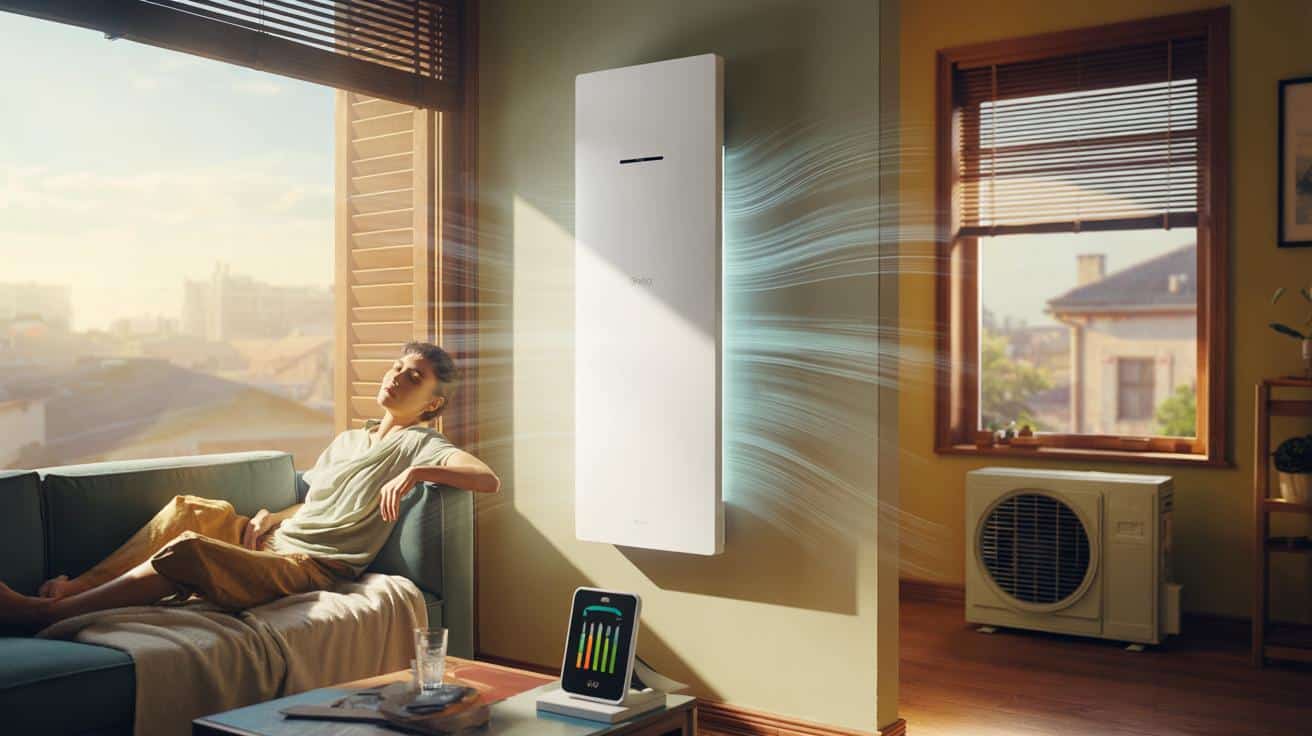
The new generation of cooling devices doesn’t look like anything most of us grew up with. No big metal cube sweating on the balcony, no dusty vents, no roaring fan in turbo mode. Instead you get something closer to a sleek Wi‑Fi router or a soundbar, hanging on the wall, pulsing quietly while the room stays at 24°C.
The real surprise isn’t the look though. It’s the power meter barely moving while the air gets cooler. For people used to dreading their July electricity bill, that feels almost like cheating.
A team at a U.S. university recently tested a prototype that cools rooms using a thin membrane and a clever “heat pump” system. No refrigerant gas leaking into the sky, no brutal air blast in your face. Just a steady, even coolness using up to 70% less energy than a standard AC unit in the same conditions.
One researcher described it like this: instead of dumping heat outdoors in a noisy rush, the device quietly shuffles it away in small, efficient steps. The result is less stress on the power grid, and less stress on your ears.
For once, the lab demo actually looked like something you could imagine in your living room, not just a science fair exhibit.
➡️ Goodbye footprint marks on your sandals: the trick to erase them and make them look new again
➡️ Psychology explains what it really means when someone always interrupts others
➡️ Shifting: why this mental escape practice is increasingly popular with teenagers
➡️ Already the world’s top tyre maker, Michelin thinks bigger with €500m double US acquisition
➡️ Scientific breakthroughs in diabetes in mark a historic turning point in treatment
What makes this breakthrough different is the way it attacks the problem. Traditional AC is basically a brute-force machine: a compressor working hard to push heat outside, which burns a lot of electricity. These new cooling devices lean on smarter physics. They use materials that naturally move heat when exposed to tiny electric currents or infrared radiation from sunlight.
Instead of constantly fighting the heat, they redirect it. That shift alone changes everything: smaller motors, less noise, fewer moving parts to break, and drastically lower consumption.
It’s like replacing a diesel truck with a quiet electric bike that somehow carries the same load.
How this new cooling tech actually works in everyday life
Forget the sci‑fi jargon for a moment. Picture this: you mount a flat panel on the wall, plug it in, connect it to an app, and set your target temperature. The device doesn’t blast air like a jet engine. It quietly absorbs heat from the room and sends it away through ultra-efficient heat channels, or radiates it out through a special surface facing the outside.
Some models combine several tricks at once. A heat pump core, an advanced membrane that lets water vapor escape, and a “radiative cooling” surface that literally beams heat out to the cold of outer space in the infrared range. You don’t see it, but you feel the calm, even coolness spreading through the room.
One pilot test in a small apartment building tells the story better than any brochure. Ten units were fitted with these new wall‑mounted devices during a heatwave. The tenants kept doing what everyone does: set the temperature a bit too low, forget the windows open sometimes, move in and out all day. Real life, not a perfect lab.
Even with that, the building’s total cooling energy use dropped by around 60% compared with the neighboring building using standard split ACs. The surprise comment from several residents wasn’t just about savings. It was about how they slept. No more midnight “vroooooom” when the compressor kicks in. Just a background hum that faded into the night.
The reason this tech can outperform traditional AC comes down to where the energy goes. AC units waste a lot of electricity as noise, friction, and leaks. These new systems harness materials that naturally change temperature when powered by tiny electrical pulses or exposed to specific wavelengths of light. Think of it as using physics shortcuts instead of pure muscle.
Because the process is smoother and more targeted, the device doesn’t need to overshoot the temperature constantly. It avoids that familiar cycle of freezing one minute and sweating the next. The room stabilizes, the compressor (if there is one at all) works less, and the energy bill starts to look a lot less scary.
Plain truth: your comfort was never supposed to cost half your paycheck.
Making the switch without turning your life upside down
The first practical step is surprisingly simple: identify the room where cooling hits your wallet the hardest. For many people, that’s the bedroom or a home office that runs all day. Targeting just that one space with an ultra-efficient device can have more impact than replacing every unit at once.
Look for systems that highlight **low global warming potential**, “radiative cooling”, or “solid-state heat pump” in their description. Those buzzwords hide the smarter physics. Check the seasonal energy efficiency ratio (SEER): the higher, the better. Some of the latest devices reach numbers that old window units can only dream of.
Then, think small and modular rather than one giant machine trying to cool the entire home.
A common trap is to expect miracles with zero effort. People plug in a revolutionary cooling unit, then keep huge west-facing windows bare, cook with all burners blazing, and leave doors open all day. The device still performs better than AC, but the potential stays half-locked.
We’ve all been there, that moment when you blame the gadget while the sun is basically turning your living room into a greenhouse. So pair the new tech with simple habits: close blinds during peak sun, seal obvious drafts, cool only the rooms you’re actually using. *These small gestures let the technology show its full power instead of constantly firefighting your lifestyle.*
Be kind to yourself too. You don’t have to transform your home overnight. One room, one device, one new habit at a time is already a win.
“Traditional air conditioners were designed in an era when electricity felt limitless and climate damage wasn’t part of the equation,” explains an engineer involved in one of the most promising projects. “The new generation of cooling devices starts from a different premise: your comfort shouldn’t overheat the planet.”
- Choose one priority room instead of the whole home
- Compare SEER ratings and look for **next‑gen cooling keywords**
- Combine the device with shades, curtains, or reflective films
- Avoid setting the temperature unrealistically low
- Track your energy use for a month to see real savings settle in
What this shift could change for summers, cities, and our nerves
Once you start noticing it, this quiet cooling revolution shows up everywhere. In office buildings putting thin reflective panels on rooftops to bounce heat back to the sky. In start‑ups turning garage prototypes into sleek, connected wall devices. In cities wondering how to keep people safe during heatwaves without blacking out the grid.
The stakes aren’t abstract. Air conditioning already eats up a big slice of global electricity use, and demand is rising fast as summers get harsher. If the next billion cooling devices are smarter, not just stronger, the curve bends. Not only for emissions, but for your personal sense of control when the forecast shows five straight days of “feels like 38°C”.
There’s also something quietly emotional here. A home that stays cool without screaming machines or guilt‑ridden bills feels different. Less like a battle against the weather, more like a calm agreement with it. Even if these breakthrough devices still need a few years to reach every market, the direction is set.
The real question becomes: when the next heatwave hits, do you want to be sweating in front of an old rattling box, or quietly watching your wall panel do its almost invisible work?
| Key point | Detail | Value for the reader |
|---|---|---|
| New cooling principle | Uses advanced materials and radiative surfaces instead of brute-force compression | Access to cooler rooms with far less energy waste |
| Energy savings | Up to around 60–70% less electricity in early real-world tests | Lower bills and less stress when heatwaves hit |
| Daily comfort | Quieter operation, fewer temperature swings, less maintenance | Better sleep, calmer rooms, and tech that blends into everyday life |
FAQ:
- Question 1Are these new cooling devices already on the market?
- Answer 1
Some are, some aren’t. A few companies already sell high‑efficiency wall units and panels using advanced heat pump and radiative technologies, while the most radical solid‑state systems are still in pilot or early commercial phases.- Question 2Can they completely replace traditional air conditioning?
- Answer 2
In small and well‑insulated spaces, yes, they can often replace AC entirely. In larger or poorly insulated homes, they may start as a complement in the most-used rooms, reducing how often and how hard your main AC runs.- Question 3Do they work in very humid climates?
- Answer 3
Performance in humid regions depends on the specific model. Some new devices integrate smart dehumidification membranes, while others still need support from traditional systems when humidity gets extreme.- Question 4Are they expensive to buy?
- Answer 4
The upfront cost tends to be similar to a good quality split AC, sometimes a bit higher. The difference shows up over time: lower energy bills and fewer moving parts to service mean the total cost over several summers can be significantly lower.- Question 5Do I need a professional to install one?
- Answer 5
Most wall-mounted systems and advanced panels still require professional installation, especially if they interact with outdoor surfaces. Simpler plug‑and‑play prototypes exist, but the most efficient solutions usually benefit from a proper setup.