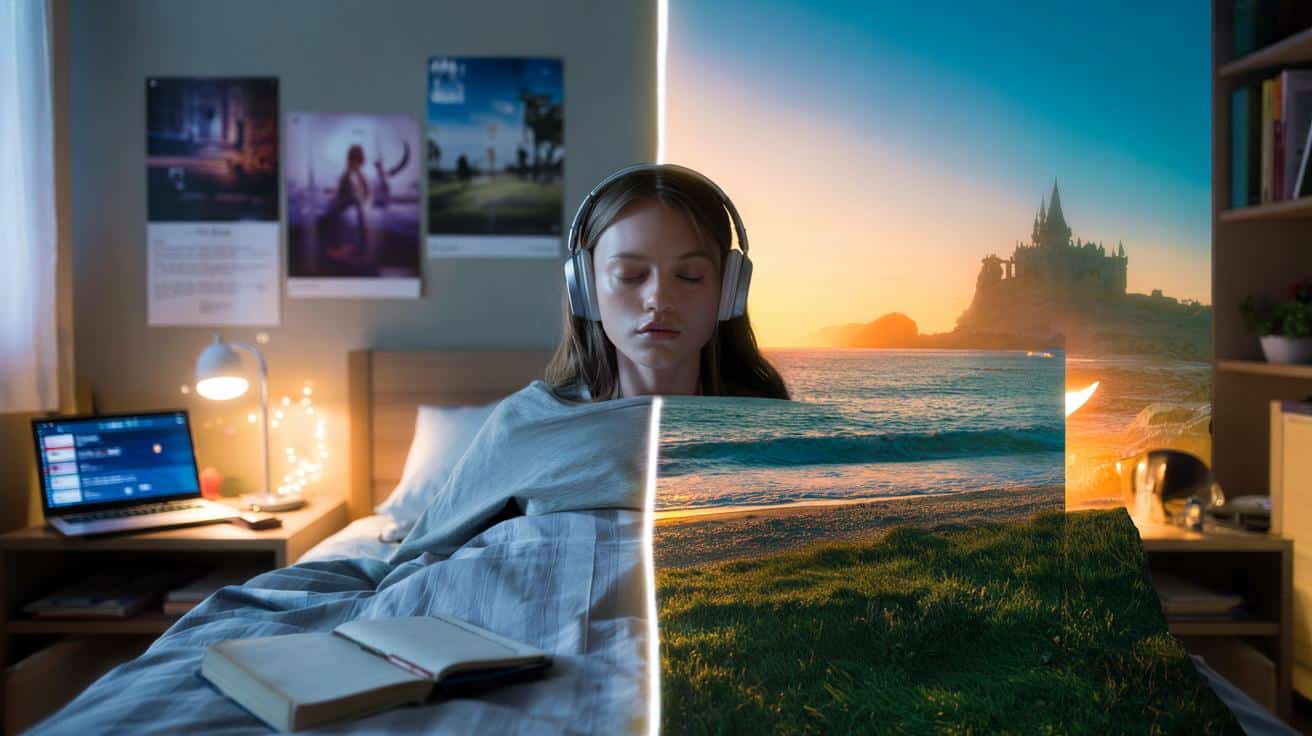
From Hogwarts to a sun‑soaked beach that exists only in memory, a growing number of young people say they can “shift” into another reality using nothing more than concentration, ritual and a vivid imagination.
What teenagers mean when they talk about shifting
In online conversations, “shifting” is short for “reality shifting”. The idea is simple to describe and much harder to pin down scientifically.
Shifting is the practice of mentally moving into a chosen universe so vividly that it feels almost as real as waking life.
Teens who practise it say they lie down, close their eyes and focus intently on a place they want to be. That place can be fictional, like the Harry Potter universe, or completely ordinary, like a grandparent’s house they miss or a holiday spot they can’t visit right now.
Many compare the experience with lucid dreaming, meditation or self‑hypnosis. The body doesn’t move, but the mind runs a detailed simulation. Some shifters report smelling grass, feeling cold air on their skin or touching objects in this “other” setting.
How a session usually unfolds
There’s no single official method. Teens share routines on TikTok, Reddit and Discord, borrowing from relaxation techniques and fan culture. A typical sequence looks like this:
- Choose a destination reality: a film, series, book universe or a real place.
- Write a “script” describing who you are there, what you look like, who is with you and how time passes.
- Lie down, often on the back, in a quiet room, lights off or very dim.
- Use breathing exercises or count (letters, numbers, affirmations) to reach a calm, altered state.
- Visualise the chosen place in extreme detail until images become almost automatic.
Those who say they succeed describe sensations that go beyond ordinary daydreaming. Others never reach that level, yet still find the attempt deeply relaxing.
Why shifting has taken off among adolescents
The practice existed in fan communities in the early 2010s, particularly in the US, but lockdowns during the Covid‑19 pandemic acted as an accelerant.
Teenagers trapped in small flats, bedrooms or student halls were suddenly cut off from school corridors, sports, parties and first loves. Social media filled part of the gap, but also amplified anxiety and bad news. Shifting arrived as a different kind of escape: private, free and controllable.
➡️ This slow-roasted pork shoulder makes the juiciest sandwiches you’ll ever eat
➡️ Airbus achieves historic feat by bringing two planes to the same point without collision
➡️ Approaching dogs reflects openness to uncertainty
➡️ The budgeting concept that finally clicked after years of frustration
➡️ A surprisingly effective way to stop forgetting what you were about to do
➡️ Already the world’s top tyre maker, Michelin thinks bigger with €500m double US acquisition
During a period when young people could not move physically, shifting offered the seductive promise of moving mentally, anywhere and with anyone.
Some adolescents imagined themselves on distant beaches, in fantasy battles or simply in a peaceful field away from tense family dynamics. Others used it to revisit comforting memories at a time of collective uncertainty.
The trend did not vanish with the end of restrictions. Hashtags related to shifting still rack up millions of views. For many teens today, it sits alongside journalling, tarot, ASMR and guided meditation as part of a broader self‑soothing toolkit.
More than fantasy: new uses emerging
Beyond pure escapism, some young adults now adapt shifting methods to practical goals. They say they rehearse job interviews, oral exams or difficult conversations inside these imagined scenarios.
In this sense, shifting overlaps with techniques used in sport psychology: visualising a performance to feel more confident in real life.
Used intentionally, the same mental skills that send a teenager to a magic castle can help them mentally rehearse walking into a stressful meeting.
Who is shifting, and what are they looking for?
Interviews with therapists and youth workers suggest that girls and young women talk about shifting more often than boys. That doesn’t mean boys never do it, but they may label it differently or avoid discussing it publicly.
Female teens are statistically more engaged with fan fiction, fantasy sagas and online fandoms, which provide ready‑made universes and characters to inhabit. Shifting naturally plugs into those narratives.
At its core, the practice feeds two powerful adolescent needs: escape and authorship. Life at school, at home or online can feel rigid and judged. In a shifted reality, the teen designs the rules, the body they inhabit, even the way time passes. That control can be intoxicating when so many aspects of daily life feel unpredictable.
Emotional relief in a stressful era
Rates of anxiety, self‑harm and depressive symptoms among teenagers have risen in several countries over the past decade. Against that backdrop, a practice promising calm, joy or “pure happiness” has obvious appeal.
Some report that, after shifting, they feel lighter, less overwhelmed and more able to face school or family tensions. For those who are bullied or isolated, an imagined friend group in another universe can feel like a temporary lifeline.
Potential risks when fantasy replaces daily life
Specialists who work with young people are not universally alarmed by shifting. Many compare it to reading an engrossing novel, writing fan fiction or spending a few hours in a role‑playing game.
The concern begins when the imaginary space is consistently preferred to real life, and daily functioning starts to suffer.
Some clinicians warn that a minority of teens may start to reject their everyday identity, seeing their shifted self as more “real” or more valuable. In those cases, schoolwork, friendships and sleep can deteriorate.
For adolescents already struggling with depression, trauma or psychotic symptoms, intense immersion in alternative realities can complicate treatment. The line between comforting fantasy and intrusive hallucination may become blurred.
| Balanced use of shifting | Problematic use of shifting |
|---|---|
| Occasional sessions, like reading before bed | Many hours a day, at the expense of sleep or homework |
| Still engaged with friends, hobbies and school | Withdrawal from social life and responsibilities |
| Sees shifting as imagination or mental exercise | Insists the other reality is the “only” true life |
| Feels relaxed and more confident afterwards | Feels distressed when unable to leave or return |
Parents sometimes panic when they hear their child talk about “leaving this reality”. Professionals advise a more measured approach: ask what the teen gets from it, how they feel afterwards, and whether school, sleep and friendships are still intact.
How parents and educators can respond
Banning shifting outright tends to backfire and push the practice underground. A more constructive strategy is to treat it as one form of storytelling and mental training among others.
Adults can encourage teens to connect shifting with creative outputs: writing, drawing, music or drama based on the places they visit in their minds. That channels the same imagination into visible skills and projects.
When adolescents feel heard about their inner worlds, they are more likely to mention when those worlds start to feel frightening or out of control.
Open questions help. Instead of “Stop doing that, it’s weird”, asking “What do you like about that place?” or “How do you feel when you come back?” gives clues about unmet needs in day‑to‑day life: safety, recognition, autonomy.
Key concepts and related practices
Shifting borrows from several established psychological phenomena without fitting neatly into any of them. A few terms often come up in discussions:
- Lucid dreaming: being aware you are dreaming and sometimes steering the dream.
- Guided imagery: a relaxation technique where a therapist or audio track walks you through a calming scenario.
- Dissociation: a mental distancing from reality that can appear in trauma, ranging from mild detachment to more severe breaks.
- Immersive daydreaming: spending long periods in complex inner narratives with recurring characters and plots.
Most teens who say they are shifting are likely engaging in a blend of immersive daydreaming and guided imagery. For many, that is harmless. For a few, especially those already fragile, it may link to stronger dissociative tendencies.
What a healthy relationship with imagined realities can look like
A teenager can enjoy shifting and still remain firmly rooted in everyday life. Signs of a healthy balance include keeping up with school, maintaining offline friendships and being able to talk about their practice with humour and distance.
Adults, on their side, can recognise that the urge to escape is not new. Earlier generations had fantasy novels under the duvet or hours lost in video games. Today’s teens may close their eyes instead of opening a book, but the motivations are strikingly similar: they are looking for a place where they feel powerful, safe and understood.