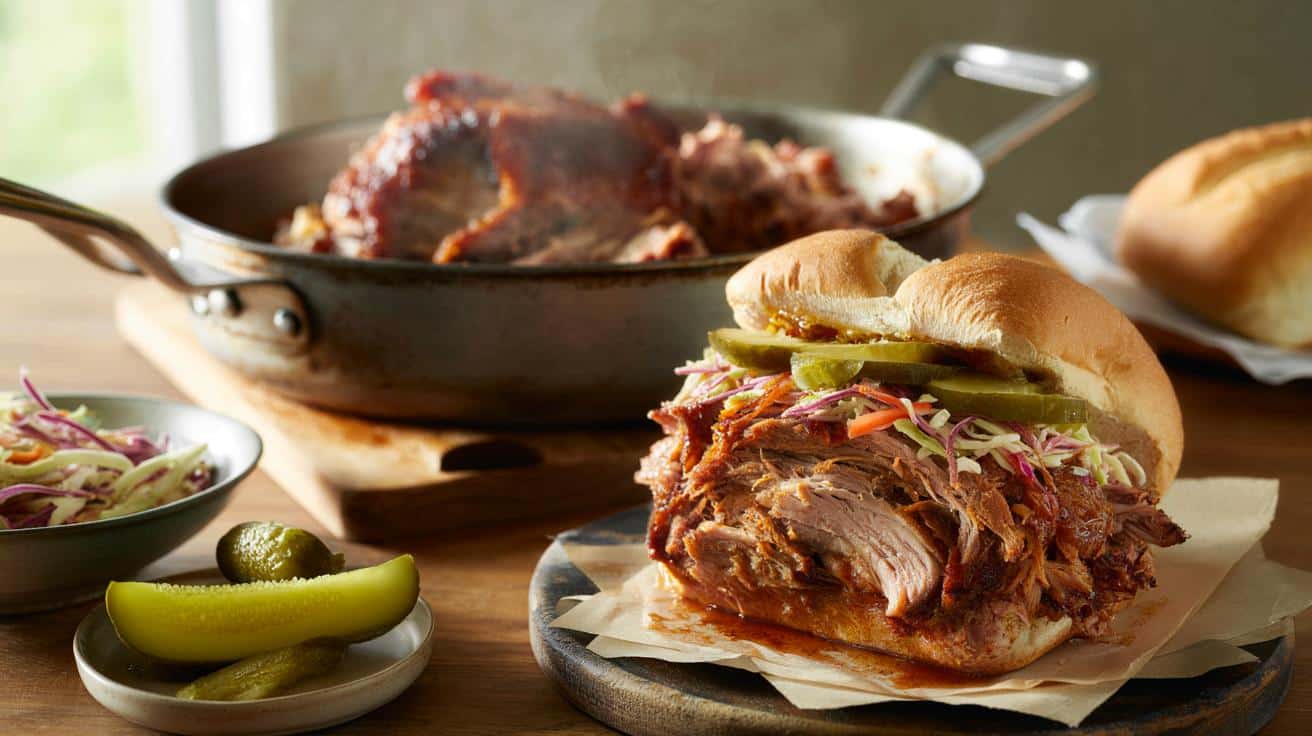
The first time I slow-roasted a pork shoulder, the house started to smell like a tiny neighborhood deli at 9 a.m. on a rainy Sunday. The windows fogged. Someone walked into the kitchen and just stopped mid-sentence, nose up like a cartoon character. No one was talking about emails or plans anymore. There was only that smell.
By the time I shredded the meat, juices running onto the board, people were already standing with plates in their hands. The first sandwich disappeared in three bites. Someone swore softly. Someone else closed their eyes.
That was the moment I realized: this is the kind of recipe that changes what you expect from a sandwich.
The quiet magic of a low oven and a cheap cut
A pork shoulder doesn’t look like much when you unwrap it. It’s pale, a little awkward, not the elegant kind of meat people brag about on Instagram. But it holds a secret. Long, slow heat turns all that connective tissue and marbling into silk that drips into your bread.
Set it in a low oven, walk away for a few hours, and the transformation is almost embarrassing in its simplicity. The meat falls apart at the touch of a fork. The fat has rendered just enough to gloss every strand.
You slice a soft roll, pile the pork high, and suddenly this humble cut feels like a small luxury.
There’s a tiny deli two blocks from my apartment that does only three things: coffee, egg sandwiches, and slow-roasted pork on rolls. No fancy decor, no chalkboard poetry. Just a steam table full of shredded meat that’s been roasting since dawn.
At noon, construction workers, office people, and parents with strollers all end up in the same line. The owner barely talks. He just dips his tongs into the pan, piles the pork, hits it with a ladle of its own juices, then smashes the top of the bun down with his palm.
You sit on the curb with the foil-wrapped sandwich and bite in. For a moment, the city noise goes flat. That’s the bar this home-roasted pork shoulder has to meet.
What slow roasting does is simple: it trades time for tenderness. A shoulder cooked hot and fast dries out, muscle fibers tightening and squeezing out moisture. At low heat, those fibers gently relax. Collagen melts into gelatin, which clings to the meat and gives you that “juicy but not greasy” effect.
➡️ How mental fatigue influences posture throughout the day
➡️ Goodbye footprint marks on your sandals: the trick to erase them and make them look new again
➡️ Stop washing your hair this often dermatologist warns we have been doing it all wrong
➡️ Scientific breakthroughs in diabetes in mark a historic turning point in treatment
This is why the oven temperature matters more than any secret ingredient. You can throw on paprika, cumin, garlic, brown sugar, or just salt and pepper. As long as the heat stays low and steady, the meat will soften, relax, and then practically beg to be shredded.
It’s not fancy science. It’s just patience doing what expensive gadgets promise.
The simple method that turns into a ritual
Here’s the stripped-down method that quietly delivers those “best sandwich of my life” vibes. Start with a bone-in pork shoulder, around 4–7 pounds. Pat it dry. Rub it generously with salt, pepper, and your favorite spices. Don’t be shy. The surface should look like it’s wearing a winter coat.
Drop it into a heavy pot or roasting pan. Add a splash of something flavorful: broth, apple juice, beer, or even just water and a splash of vinegar. Cover tightly with a lid or foil. Then into a 275°F (135°C) oven it goes.
Walk away for 4–6 hours. When you come back, the bone should slide out like it’s giving up a secret.
This is where people usually panic. They worry they’re doing it wrong because it’s “too easy”. They open the oven every 30 minutes, basting, poking, doubting. The only thing that really hurts this recipe is impatience and fussing.
We’ve all been there, that moment when you second-guess a recipe because it doesn’t ask enough of you. You’re convinced there has to be a trick. Some special step only real cooks know. But **the truth is, the hardest part of slow-roasted pork shoulder is trusting the process**.
Let’s be honest: nobody really does this every single day. That’s why when you do, it feels like a small event. A quiet celebration hiding inside a Wednesday.
Once the pork is fall-apart tender, that’s when the sandwich really takes shape. Let the meat rest a bit, then grab two forks and start pulling. Mix the shredded pork gently with its own juices at the bottom of the pan. Taste. Add a little more salt or a dash of vinegar if it needs brightness.
“Sandwiches aren’t just about fillings,” a cook once told me, watching me stack meat too high. “They’re about balance. Soft, crunchy, rich, sharp. If every bite makes you want the next one, you did it right.”
Now comes the play. Here’s a simple boxed list of winning combos:
- Soft roll + slow-roasted pork + crisp coleslaw + dill pickles
- Ciabatta + pork + provolone + sautéed onions + garlic mayo
- Brioche bun + pork + spicy barbecue sauce + quick-pickled red onions
- Sourdough + pork + mustard + roasted peppers + arugula
- Tortilla wrap + pork + lime crema + shredded lettuce + cilantro
Why these sandwiches feel bigger than the recipe
There’s something about pulling a pan of slow-roasted pork from the oven that changes the mood of a day. The smell creeps into every room. People wander in “just to check” how it’s going. Someone tears off a tiny piece from the corner, then another, then suddenly you’re defending the pan with a spatula.
You lay out the rolls, the sauces, maybe a bowl of slaw, and quietly step back. Everyone builds their own sandwich a little differently, staking their claim with extra pickles or dripping barbecue sauce. You learn something about people by what they put on their plate.
*Some meals fill your stomach; this one quietly fills the room.*
| Key point | Detail | Value for the reader |
|---|---|---|
| Low and slow cooking | Roast pork shoulder at 275°F (135°C) for several hours until fall-apart tender | Delivers incredibly juicy, pull-apart meat with almost no active work |
| Use the pan juices | Shred pork directly into its own rendered juices and season to taste | Maximizes flavor and prevents dry, bland sandwiches |
| Build balanced sandwiches | Pair rich pork with crunch, acid, and softness (slaw, pickles, good bread) | Turns simple leftovers into deli-level, crowd-pleasing sandwiches |
FAQ:
- Question 1What’s the best cut of pork for these ultra-juicy sandwiches?
- Answer 1Go for pork shoulder or pork butt (they’re often the same thing, just labeled differently). Look for some marbling and, if possible, a bone-in piece. Lean cuts like loin will dry out with this method.
- Question 2How do I stop the pork from drying out?
- Answer 2Keep the oven low, cover the pan tightly, and don’t rush the cooking time. A bit of liquid in the bottom of the pan helps create a steamy environment. If it seems dry after shredding, stir in extra pan juices or a splash of broth.
- Question 3Can I use a slow cooker instead of the oven?
- Answer 3Yes. Season the shoulder, add a little liquid, and cook on low for 8–10 hours. You may want to finish it uncovered in a hot oven for 15–20 minutes if you like crisp edges on the meat.
- Question 4How far in advance can I make it?
- Answer 4You can roast the pork a day or two ahead. Store the shredded meat in its juices in the fridge, then reheat gently on the stove or in the oven, covered, with a splash of water or broth until hot and tender again.
- Question 5What’s the best bread for these sandwiches?
- Answer 5Use something soft but sturdy: brioche buns, potato rolls, ciabatta, or split baguettes. Lightly toasting the inside adds structure so the bread holds up against all that juicy pork.